Gemini vs Perplexity for Research: Which AI Tool Is Better?

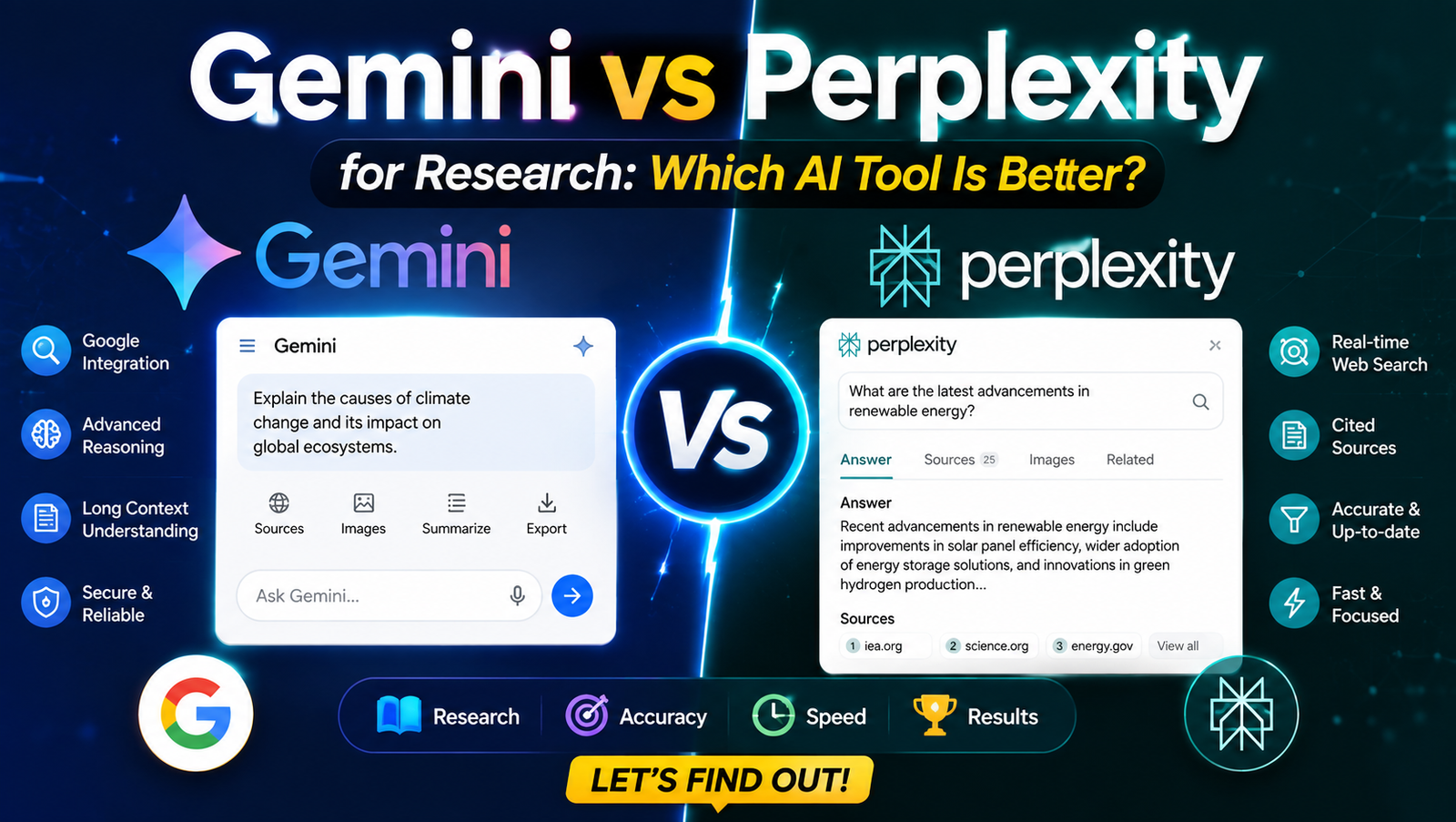
When comparing Gemini vs Perplexity for Research, both stand out as powerful AI research tools that can act as an AI research assistant for online research, web research, and information discovery. Perplexity is more research-focused AI, combining AI-powered search, live web search, and an answer engine to provide real-time information, up-to-date information, source discovery, and efficient knowledge retrieval.
Gemini is a broader research assistant that can support academic research, research queries, information retrieval, and complex research workflows. Both tools can improve research efficiency, research automation, fact-finding, and fact-checking, but their strengths differ. Perplexity is particularly useful for search-based AI and current information, while Gemini can be valuable for deeper analysis and broader research tasks.
Table of Contents
Perplexity Research Features
Perplexity AI is a research-first AI built around a search-first architecture, making it useful for online research and quick information discovery. The Perplexity answer engine combines Perplexity search and real-time search to deliver AI-generated answers with sources. Perplexity Pro and Perplexity Deep Research support deeper multi-source research, cited research reports, research summaries, and source aggregation, while its web search engine helps users handle complex search queries efficiently.
Perplexity also offers strong model flexibility through Sonar models, GPT models, Claude models, and Gemini models, with AI model routing helping select suitable models for different tasks. Features such as research threads and Spaces make research organization easier by keeping related searches and information together. This makes Perplexity useful for fast answers, multi-source research, and structured research workflows.
Gemini Research Features
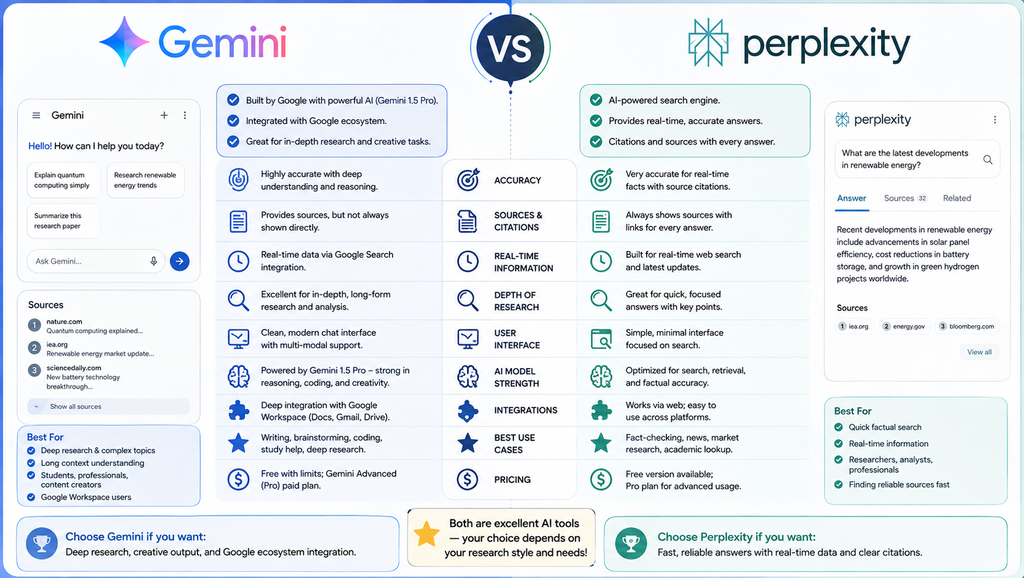
Google Gemini, also known as Gemini AI, works as a versatile AI assistant with strong Google Search integration and access to the wider Google ecosystem. With Gemini Deep Research and Gemini Advanced, users can handle complex topics through advanced reasoning, deep analysis, research synthesis, and document analysis. Its long-context AI capabilities and large context window are particularly useful when working with lengthy research materials.
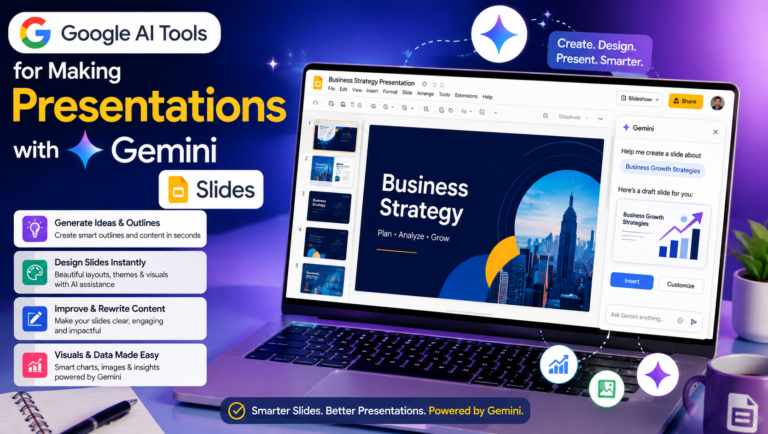
Another major advantage is its multimodal AI capability, supporting text analysis, image analysis, video understanding, audio processing, and coding assistance. Gemini also connects with Google Docs, Google Drive, Gmail, and Google Workspace, while Chrome integration can support browsing and research tasks. This combination makes Gemini not only a research tool but also a practical productivity assistant for organizing, analyzing, and creating research-based work.
Visit this: Best AI Productivity Tools for Organizing Study Notes
Gemini vs Perplexity for Research Methods & Deep Research
| Gemini vs Perplexity for Research Method | Gemini | Perplexity |
|---|---|---|
| Deep research | Gemini Deep Research supports research mode, autonomous research, multi-step research, and research planning for complex topics. | Perplexity Deep Research performs autonomous, multi-step searches and gathers information from multiple online sources. |
| Research synthesis | Strong at research synthesis, information synthesis, and analyzing large amounts of content. | Strong at source synthesis, multi-source analysis, and turning web research into cited findings. |
| Academic research | Useful for literature review, academic paper analysis, scholarly research, and research proposals. | Useful for scholarly research, literature searches, academic paper analysis, and evidence gathering with citations. |
| Business research | Supports trend analysis, technical research, competitive research, market research, and industry research. | Particularly effective for market research, competitive research, industry research, and trend analysis using current web sources. |
| Data & reports | Handles data analysis and can help create a research report, structured report, or research summary. | Can combine evidence gathering with source-backed research reports and concise research summaries. |
| Best for | Complex analysis, long documents, research planning, and broad information synthesis. | Web-based investigation, current information, multi-source analysis, and evidence gathering. |
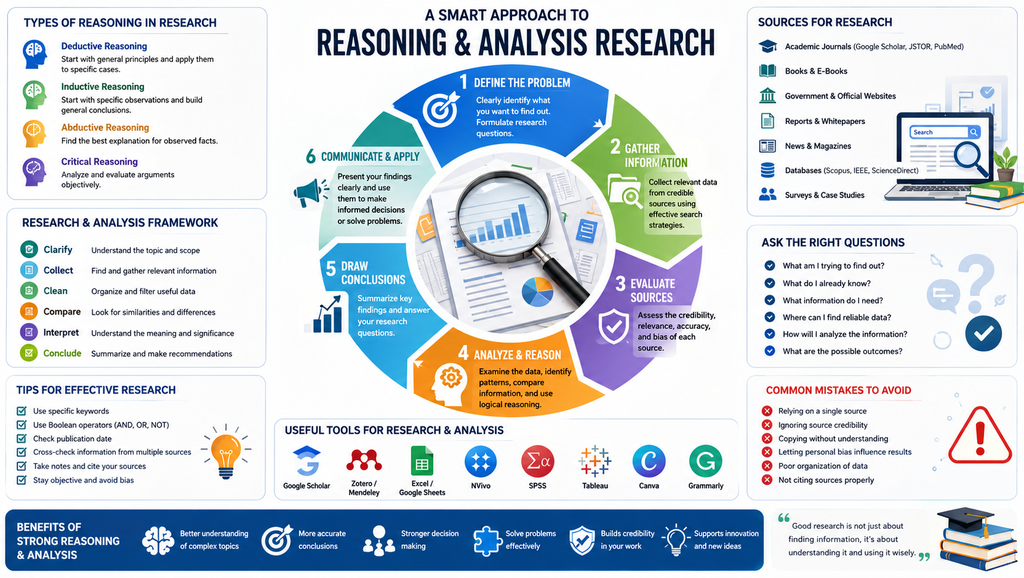
Reasoning & Analysis of Gemini vs Perplexity for Research
When it comes to AI reasoning, Gemini is often a strong choice for tasks that require deep reasoning, analytical thinking, and complex problem solving. Its reasoning capabilities support logical reasoning, critical thinking, contextual understanding, and multi-step analysis. This makes it useful for technical analysis, research interpretation, data interpretation, and extracting meaningful research insights from complex information.
Perplexity takes a more research-centered approach, combining structured reasoning with web-based evidence. It is effective for information synthesis, source comparison, trend interpretation, and evidence-driven analysis. For researchers who need hypothesis generation, strategic thinking, or forward-looking analysis, Gemini can provide greater analytical depth, while Perplexity is particularly useful when current sources are essential to the reasoning process.
Gemini vs Perplexity for Research Use Cases
- Students & Researchers: Gemini is useful for student research, academic research, literature research, research papers, and scholarly articles, while Perplexity helps researchers quickly find cited sources and verify information.
- Journalists & Content Writers: Journalists can use Perplexity for news research, current events research, and fact-checking. Content writers and bloggers can use both tools for topic research, source discovery, and content planning.
- Marketers & Analysts: Marketers can use Gemini and Perplexity for market analysis, competitor analysis, product research, and identifying industry trends. Analysts can combine their research capabilities with data-driven insights.
- Business & Professional Research: For business research, technical research, scientific research, and professional research, Gemini is useful for deeper analysis and document work, while Perplexity is valuable for current web information and source-backed findings.
- Knowledge Workers: Knowledge workers can use both AI tools to organize information, compare sources, investigate complex topics, and speed up everyday research workflows.
Content Creation & Writing of Gemini vs Perplexity for Research
- AI Writing & Content Generation: Gemini works well as a writing assistant for article writing, blog writing, creative writing, rewriting, and long-form content. Perplexity is especially useful for research-based writing and creating source-backed content.
- Research & Brainstorming: Both tools can support brainstorming and generate content ideas. Perplexity can help with editorial research and gathering sources, while Gemini can turn researched information into organized drafts.
- Summarization & Rewriting: Gemini is useful for content summarization and text summarization, while both platforms can simplify, rewrite, expand, or restructure existing content.
- Content Structure: Gemini can help create clear content structure and structured output for articles, reports, and other formats. Perplexity can provide research findings that make the final content more evidence-based.
- Writing Productivity: For writing productivity, Gemini is a strong choice for drafting and refining content, while Perplexity is valuable when writers need accurate sources and fresh information before writing.
Visit this: How to Make Study Notes with ChatGPT: Prompts, Tips & Examples
Multimodal Research & Documents
Gemini has a strong advantage in multimodal AI, making it useful for research involving different types of content. It can handle image understanding, video analysis, audio analysis, document analysis, and PDF research. Researchers can use Gemini for image-based questions, video understanding, text extraction, and code analysis, making it practical for visual research and multimedia research.
Perplexity is particularly useful for web-based document research, source discovery, and analyzing information from complex documents. It can help researchers investigate long documents and large files while combining findings with online sources. For tasks requiring long-context reasoning and detailed contextual analysis, Gemini may have an edge, while Perplexity is often more useful when document findings need to be connected with current web research.
Models, Integrations & Ecosystem
Gemini offers access to advanced AI models developed by Google DeepMind, with Gemini models designed for reasoning, research, and multimodal tasks. Its strong Google ecosystem integration connects naturally with Google Workspace, including Gmail integration, Google Docs integration, Google Drive integration, and Chrome integration. This makes Gemini useful for researchers who want connected apps, productivity tools, and seamless AI workflows within Google’s services.
Perplexity focuses more on multiple AI models, giving users greater model flexibility and model selection across available options. Depending on the plan and feature, users may access models such as Sonar, GPT, and Claude, while model routing can help match AI models to specific tasks. Perplexity also supports third-party integrations and tool integration, making it a flexible option for research workflows that require different models and external productivity tools.
Strengths & Limitations
| Factors of Gemini vs Perplexity for Research | Gemini | Perplexity |
|---|---|---|
| Key strengths | Strong Gemini advantages include reasoning depth, creative output, writing quality, multimodal capabilities, context handling, and ecosystem integration. | Major Perplexity advantages include real-time data access, search reliability, source transparency, and strong citation quality. |
| Research accuracy | Can provide detailed analysis, but users should still check important claims because AI hallucinations can occur. | Strong for source-backed research, although research accuracy depends on the quality and reliability of retrieved sources. |
| Citations & sources | Useful for research, but citation quality and source transparency can vary depending on the research task. | One of its biggest strengths is transparent sourcing, allowing users to review supporting references more easily. |
| Reasoning | Generally offers strong reasoning depth and context handling for complex analytical tasks. | Strong at synthesizing web sources but may be less suitable for tasks requiring extensive standalone reasoning. |
| Data & search | Google ecosystem integration provides access to useful information, but real-time data access can vary by feature. | Real-time search and web retrieval make it particularly useful for current information and fact-finding. |
| Limitations | Gemini limitations can include model limitations, occasional AI hallucinations, and differences in output quality across tasks. | Perplexity limitations include dependence on retrieved web sources, potential search gaps, and the need for research verification. |
| Workflow | Strong ecosystem integration and workflow automation can make it convenient for users already working with Google productivity tools. | Excellent for research workflows, but its search-first approach may be less suitable for some creative or broader productivity tasks. |
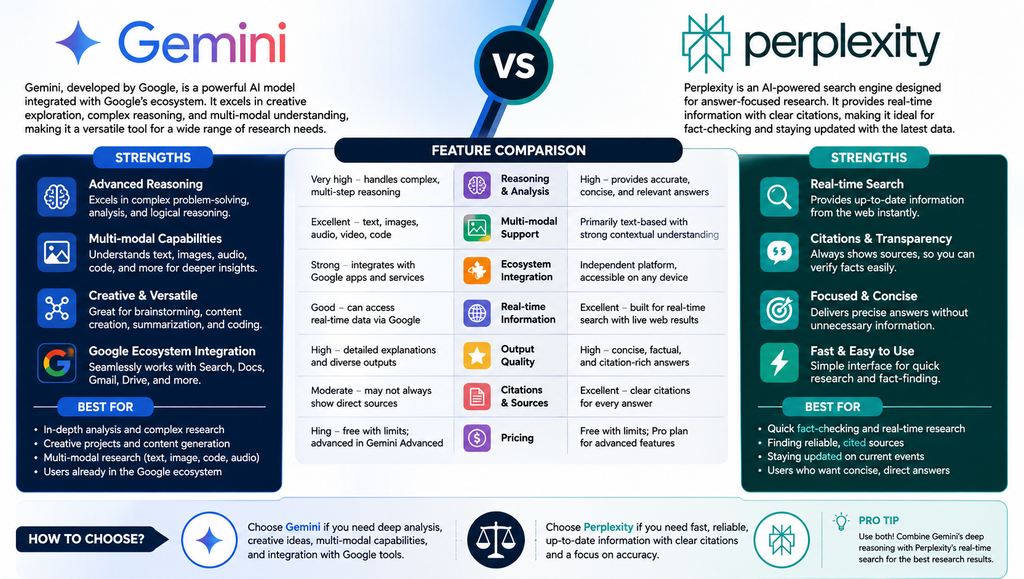
Gemini vs Perplexity for Research: Choosing the Right Tool
Gemini vs Perplexity for Research comes down to retrieval vs reasoning. Perplexity is often better for source-backed research, real-time searches, citations, and fact-checking, making it a strong best AI Gemini vs Perplexity for Research tool for students, academics, and researchers. Gemini is stronger for deeper analysis, synthesis, multimodal tasks, and productivity.
If you’re choosing Gemini vs Perplexity for Research, consider your goal. Choose Perplexity for research when finding reliable sources is the priority, and Gemini for research when you need reasoning, analysis, and content synthesis. This makes the Gemini vs Perplexity for Research decision largely a choice between search vs reasoning and productivity vs research.
Frequently Asked Questions About Gemini vs Perplexity for Research
Is Gemini or Perplexity better for research?
Perplexity is generally better for web research, source discovery, citations, and current information, while Gemini is stronger for deep analysis, synthesis, and handling complex research tasks.
Is Perplexity better than Gemini for academic research?
Perplexity can be useful for academic research because it quickly finds sources and provides citations. However, important academic claims should always be verified against the original scholarly sources.
Is Gemini good for research?
Yes. Gemini is useful for research that involves document analysis, long-context reasoning, information synthesis, multimodal content, and complex problem-solving.
Which is better for fact-checking, Gemini or Perplexity?
Perplexity is often more convenient for fact-checking because it searches the web and provides sources with its answers. Users should still verify important claims using authoritative sources.
Can I use Gemini and Perplexity together for research?
Yes. Using both can be effective: use Perplexity for source discovery and current information, then use Gemini for deeper analysis, synthesis, and organizing research findings.